Make it Yours with TUMI personalisation. Discover


You Might Also Like


How to choose your luggage
Luggage is a system rather than a single purchase. Most travellers end up with two or three pieces that cover different lengths of trips, and the range is organised to make building that straightforward. Start with size, then material, and the rest follows.
Size first, then material
The length of the trip decides the case, so begin there.
- Cabin luggage: sized for the overhead bin, in three options so you can match the case to the airlines you fly most.
- Checked luggage: from medium suitcases through to XX-large, for trips that need more than the cabin allows.
- Trunks: a deeper, squarer shape that packs differently to a conventional suitcase.
- Luggage sets: matched cases that cover several trip lengths, or a case paired with what travels alongside it.
Then choose your material
Material shapes how a case wears and how it protects what is inside. Hard shells hold their form and shield fragile contents; soft-side cases offer exterior pockets and a degree of give. Three materials have a category of their own:
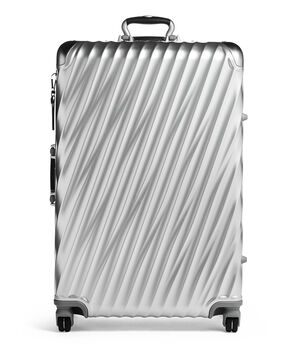
- Aluminium luggage: exceptional strength and resilience, with latch closures and a shape that stays fixed.
- FXT Ballistic Nylon luggage: our most durable fabric, with the give that lets a full case still close comfortably.
- Titanium luggage: a distinctive hard shell, unique in look and built to last.
You will find more across the range, including polycarbonate. Use the material filter as you browse to narrow the options.
Beyond suitcases
If wheels and a handle are not what your trip needs, these are the alternatives:
- Duffle bags and weekenders for short breaks that pack softly.
- All backpacks for travel, work and everyday carrying.
- All bags to carry by hand or over one shoulder.
- All accessories for organisers, covers, cleaners and everything that goes with your luggage.
What to look for in any case
Interior organisation
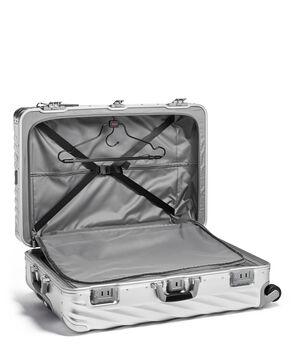
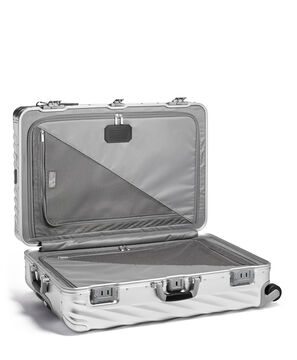
Tie-down systems, compartments and dividers keep clothing in place across a journey, so the case you unpack looks like the one you packed. It is the difference between arriving ready and arriving to a repack.
Expansion
An expandable case adds volume for the return journey, when luggage tends to fill up. Bear in mind that expanded dimensions can exceed cabin allowances, so check before you use it on a flight.
Construction that lasts
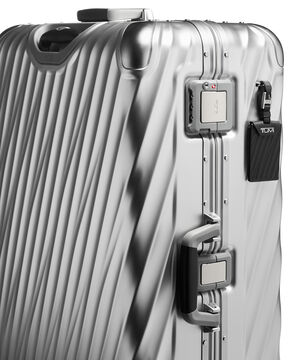
The moving parts are what decide how long a case lasts. Wheels, handles and zips take the most use, and they are the components that separate a case you keep from one you replace. Material sets how a case protects and wears; the components decide how it performs day to day. Product pages list both, so you can weigh them together.
Designed to be kept
Luggage is bought rarely and expected to last, which is why what happens after the purchase matters. Add an embroidered or embossed monogram on selected cases to make yours recognisable on a carousel, register with TUMI Tracer so a lost bag has a route back to you, and rely on our repair network to service individual components rather than replacing the case.
FAQ
What size luggage do I need?
Work from the length of the trip rather than the measurements. Cabin luggage covers short trips and anything you would rather keep with you, and comes in three sizes so you can match the case to the airlines you fly most. Checked luggage runs from medium suitcases through to XX-large, for journeys that need more than the cabin allows. Trunks offer a deeper shape for long trips and relocations. If you travel regularly, a cabin case and a checked case together cover almost everything, which is why many people start with a luggage set rather than a single piece.
Which luggage material should I choose?
It depends on what you pack and how you travel. Hard shells in aluminium, titanium or polycarbonate hold their shape and protect fragile contents, which makes them the stronger choice for cameras, tech and anything you would rather not risk. Soft-side cases, including those in FXT Ballistic Nylon, give you exterior pockets and a degree of give when the case is fuller than planned. Aluminium and other latch-closed cases do not expand, so size selection matters more with those. Filter by material to see what is available in each size.
What luggage should I take for different kinds of trip?
Most trips fall into a few familiar patterns. For a city break, a cabin case and a travel backpack cover everything without a trip to the carousel. For business travel, pair a cabin case with a laptop backpack so your work stays with you and your clothes stay pressed. For a longer holiday, a checked case gives you the room, and packing cubes and a washbag keep a larger interior organised. When more than one person is packing, a luggage set covers several sizes at once and keeps every piece recognisable as part of the same set. Whichever pattern fits your trip, it is the combination that makes packing straightforward.
What are the cabin and hold luggage limits?
There is no universal standard, so always check with your carrier before you fly. Airlines set their own limits on both the dimensions and the weight of luggage, and those often differ between fare types on the same airline. For cabin luggage the dimensions usually decide it, since the case has to fit the overhead bin or under the seat. For checked luggage weight is the limit most travellers reach first, and the case itself counts towards it before you pack anything. If you fly with several airlines, a smaller cabin case gives you the widest compatibility.
How do I look after a suitcase?
Most of it is routine. Wipe the shell down after travel, and keep wheels and zips clear of grit, since that is where build-up affects how a case operates. For marks that need more than a wipe, use a cleaner made for the material: there are separate formulas for hardside shells, fabric and leather, so you are not using the same product on very different surfaces. Store cases somewhere dry and, where the design allows, with the interior empty and aired rather than packed. A luggage cover protects the shell in the hold if you would rather limit marks in transit. When something does need attention, our repair network services wheels, handles and zips individually rather than replacing the case.