Make it Yours with TUMI personalisation. Discover


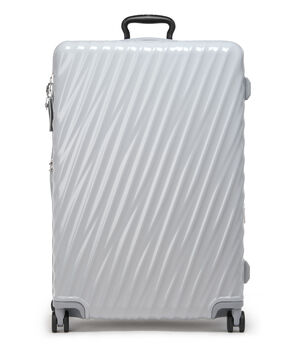
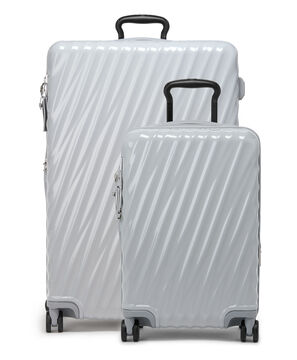


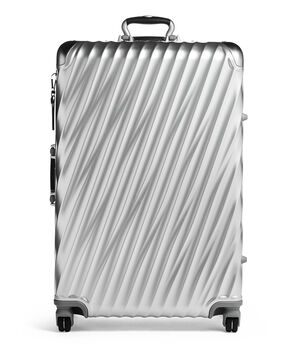


You Might Also Like


Match the case to the number of days
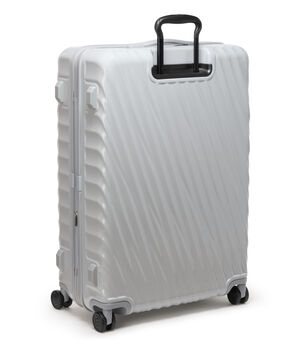
Checked luggage carries what a longer trip requires. Freed from cabin restrictions, it gives you the volume for a week, a month or a season away, along with the structure to protect what is inside while it travels in the hold. TUMI checked luggage is built around that job, with durable shells, considered interiors and components tested to last. The right case comes down to how long you are going and what you need to bring.
Sizes and what they carry
Our checked range is grouped by trip length, so you can work from the number of days rather than a list of measurements. Airlines set their own limits on the weight and dimensions of hold luggage, so check both before you pack. A larger case fills up faster than most travellers expect.
- Medium Checked: a medium suitcase for around a week away, and the easiest size to handle on stairs and in car boots.
- Large Checked: large and extra-large suitcases for extended trips, or for travellers who prefer room to spare.
- XX-Large Checked: maximum capacity for the longest journeys, relocations and travel with family.
- Trunks: a deeper, squarer shape that packs differently to a conventional suitcase.
Features that matter in the hold
Expansion
An expandable case adds volume for the return journey, when luggage tends to fill up. Hold luggage is limited by weight as well as overall dimensions, and weight is usually the constraint you reach first, so a case can hit your airline's allowance before it is physically full. Check both limits on your ticket before you use the expansion.
Interior organisation
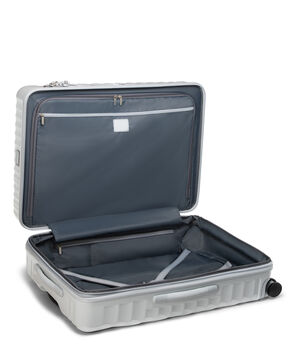
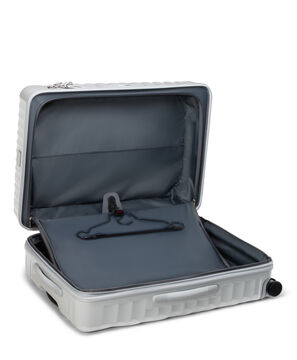
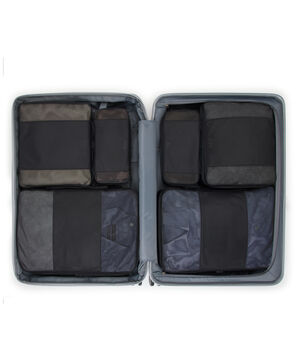
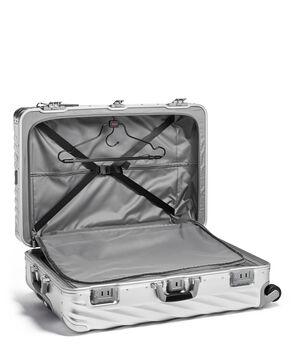
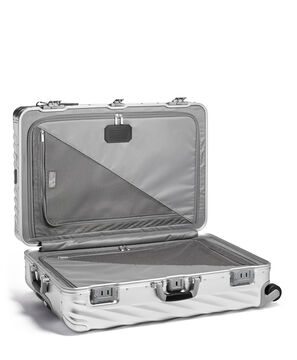
Tie-down systems, compartments and dividers keep clothing in place across a long journey, which matters more in the hold than it does in the cabin. Selected cases offer front access as well as the main compartment, so you can reach what you need without unpacking everything.
Garment cases
If you travel with suits, tailoring or dresses, a garment case carries them flat and ready to wear rather than folded into a conventional interior.
Closures and construction
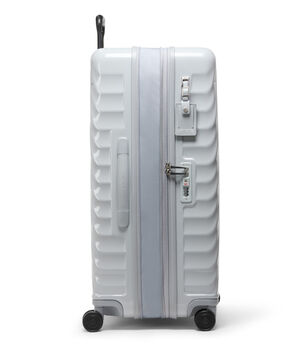
Most checked cases close with a zip, which is what allows the interior to expand. Others, including aluminium cases, close with latches and keep a fixed shape. It is a straightforward choice between flexible capacity and a defined structure, and both are available across the range.
Choose your material
Material shapes how a case wears and how it protects what is inside. Hard-shell cases in polycarbonate, aluminium or titanium hold their shape under the weight of other luggage. Soft-side cases give you exterior pockets and a degree of flexibility when the case is full.
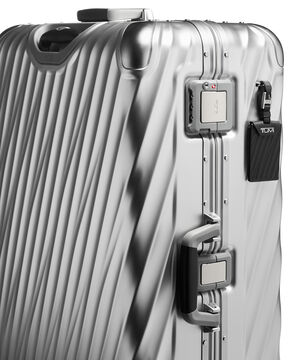
- Aluminium luggage: exceptional strength and resilience, with latch closures and a fixed shape that holds under load.
- FXT Ballistic Nylon luggage: our most durable fabric, with the give that lets a full case still close comfortably.
- Titanium luggage: a distinctive hard shell, unique in look and built to last.
You will find more across the range, including polycarbonate. Use the material filter as you browse to narrow the options.
Explore the wider TUMI luggage range
Checked luggage works best as part of a set that covers every trip length.
- Cabin luggage for short trips, and as a second case alongside a checked one.
- Luggage sets to pair cabin and checked cases in one coordinated look.
- Travel organisers to structure a larger interior and keep categories separate.
- Product care and luggage covers to keep a case in condition between trips.
Designed to be kept
Checked luggage spends part of every journey out of your sight, which is why the details matter. An embroidered or embossed monogram on selected cases makes yours easy to pick out on a crowded carousel, and registering with TUMI Tracer gives a lost case a route back to you. When something does need attention after years of handling, our repair network is there to put it right.
FAQ
What size checked luggage do I need?
Work from the length of the trip rather than the measurements. A Medium Checked case suits around a week away and stays manageable on stairs and in car boots. Large Checked covers extended trips, and gives you room to spare if you tend to bring things home. XX-Large Checked is built for the longest journeys, relocations and travelling with family. Airlines set limits on both the weight and the overall dimensions of hold luggage, and weight is the one most travellers reach first, so a larger case can hit the allowance before it is full. Check both figures with your carrier before you travel, particularly at the largest sizes.
What is the difference between checked luggage and cabin luggage?
Checked luggage, also called check-in luggage, is the case you hand over at the desk or bag drop and collect from the carousel at your destination. Cabin luggage stays with you in the overhead bin. Because a checked suitcase is not bound by cabin dimensions, it offers considerably more volume, which is why it suits longer trips and anything you cannot fit into a cabin case. The trade-off is time at both ends of the journey and the weight and size limits set by your airline. Many travellers take both, keeping valuables, medication and a change of clothes with them in the cabin.
Should I choose hard-shell or soft-side checked luggage?
It depends on what you pack and how much you tend to bring back. Hard-shell checked luggage in polycarbonate, aluminium or titanium holds its shape under the weight of other bags in the hold, which makes it the stronger choice for anything fragile. Soft-side cases, including those in FXT Ballistic Nylon, give you exterior pockets and a degree of give when the case is fuller than planned. Both are available in expandable constructions, so neither choice locks you into a fixed capacity. If protection is the priority, choose hard-shell; if flexibility and quick access matter more, soft-side will serve you better.
What is a trunk, and who is it for?
A trunk is a deeper, squarer case that packs differently to a conventional suitcase. The proportions give you a more usable interior for bulky items, folded garments and anything that does not lie flat in a standard shell. Trunks suit long trips, relocations and travellers who pack in stacks rather than layers, and they stand upright in a way that makes unpacking at your destination straightforward. They are also a practical choice for anyone travelling with equipment or gifts that need protecting. Trunks are grouped together in their own part of the checked range, so you can compare the shapes side by side.
How do I protect checked luggage in the hold?
Start by packing so nothing moves. Use tie-down straps and fill gaps with softer items, since contents that shift are more likely to be damaged than contents that are held in place. Keep valuables, documents, medication and anything irreplaceable with you in the cabin rather than in the hold. A luggage cover protects the shell from marks in transit, and registering your case with TUMI Tracer means a lost bag has a route back to you. Adding a monogram on selected cases also makes yours easy to identify on a carousel of similar-looking suitcases.